
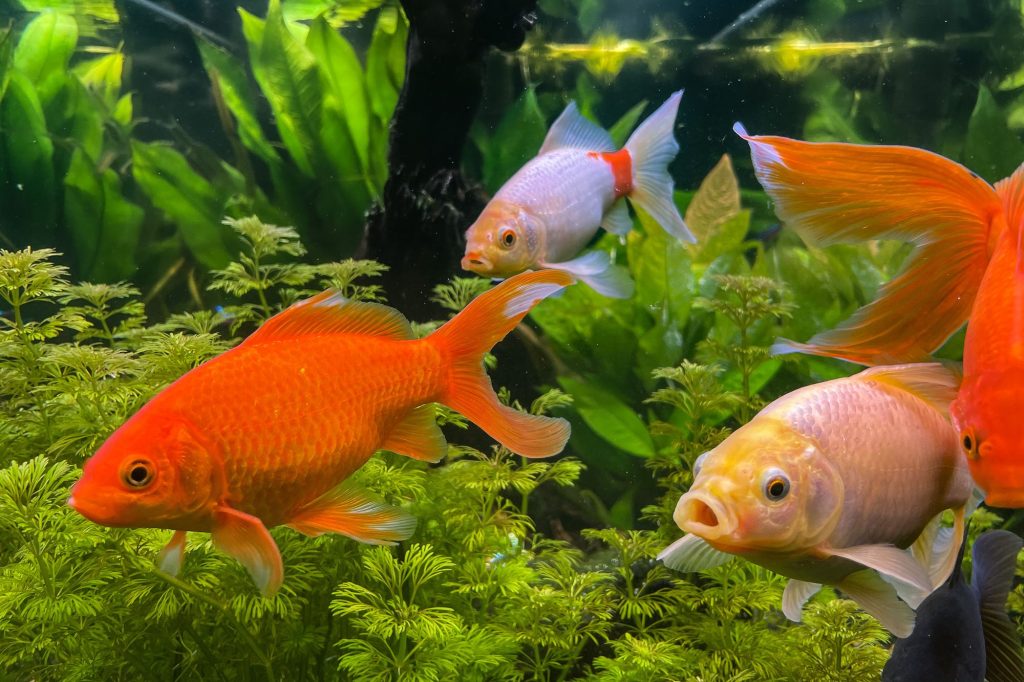
Goldfish are known to be one of the most world-renowned and popular aquarium fish. Their cheerful colors and peaceful demeanor, as well as elegant swimming habits, have made them a favorite among beginner fish keepers and more expert fish keepers. Goldfish are believed to be easy pets, yet they are not well cared for.
One of the myths is that goldfish can be kept in small bowls and require minimal care. Actually, goldfish need large tanks, clean water, and regular care to live healthy and long lives. In the right environment, goldfish may become large and active and live several years.
Knowing about the behavior, needs, and feeding habits of goldfish is going to help the owners to provide them with the ideal aquarium that they can call home.
What Are Goldfish?
Goldfish are freshwater fish that are of the carp family. They were first domesticated in ancient China more than 1000 years ago through the process of selection among wild species of carp. Gradually, breeders created numerous variants of breeds that differ in the form of the body, color, and style of the fin.
The goldfish today come in a large variety of shapes, from simple one-tailed ones to more elaborate ones that have flowing fins and rounded bodies. Regardless of these variations, there are common environmental requirements and care requirements for all goldfish.
Goldfish are intelligent and social fish that can learn feeding habits and be used in communication with the environment.
Types of Goldfish
There are two broad categories of goldfish, which are single-tailed goldfish and fancy goldfish.
Single tailed goldfishes encompass common goldfish, comet goldfish, and shubunkins. These varieties are vigorous swimmers and become very large, and in favorable conditions, they attain over 10 to 12 inches. These are suited for large aquariums or outdoor ponds.
Oranda, ryukin, fantail, and ranchu are popular types of fancy goldfish. These fish possess circular bodies and have ornamental fins, and are hence slow swimmers. The body structure of fancy goldfish makes them more focused and requires a calm part of a water flow and a bit more care. The type to select is dependent on the size of the tank and the level of experience of the keeper.
Goldfish Lifespan
Goldfish is a highly unexpectedly long-lived fish when properly taken care of. The lifespan is 10-15 years, but in good conditions, goldfish live over 20 years on average.
Poor water quality, overcrowding, or keeping goldfish in small bowls are usually the causes of short lifespans. Good environments enable goldfish to develop normally and also have strong immune systems. Correctly handled care contributes a lot to longevity and general well-being.
Ideal Tank Size for Goldfish
The tank size is among the most significant factors of goldfish care. The waste generated by goldfish is higher than that of most other aquarium fish, and this requires them to have more water to be stable.
An average goldfish is 20gallons, a single fancy goldfish is a minimum of 20 gallons, and single-tailed goldfish are often 40gallons or larger because of their active swimming behaviors and, as adults, weigh more than 20gallons. The bigger tanks help spread the load of waste and decrease stress so that conditions of clean water are not violated.
Water Filtration and Water Quality
The goldfish grows in clean and oxygenated water. They generate a lot of waste, and thus it is important to have powerful filtration to have a healthy aquarium.
Quality filter eliminates debris and favors healthy bacteria that decompose harmful toxins like ammonia and nitrite. Weekly partial water changes should also be done to ensure there is a chemical balance. The water parameters are stable, avoiding disease and promoting active behavior.
Temperature Requirements
In contrast to tropical fish, goldfish tolerate lowerwater temperatures of water. The optimum conditions are between 18 C and 23 C. There should not be extreme changes in temperature, as the abrupt tempering puts a strain on the fish.
Heaters are not usually necessary in the case of goldfish, except when the temperatures of the room go drastically low. It is better to maintain the conditions rather than to reach the precise temperature values. Oxygen levels are also required to be correct, particularly during hot weather.
Feeding Goldfish Properly
Goldfish are omnivores, and they must have a balanced diet with both plant and protein-based food. Their nutrition is based on high-quality goldfish pellets or flakes.
Peas, spinach, or lettuce can be served as occasional vegetables to aid the digestion process. The issue of overeating should be avoided since unconsumed food contaminates water very fast and leads to health complications. Regular feeding of tiny portions =1-2 times a day makes goldfish healthy, but not impactful on the water quality.
Behavior and Compatibility of Goldfish
Goldfish are docile creatures, and they do not normally have problems with other creatures of their kind. But competition on feeding could occur when fast single-tailed goldfish are mixed with slower fancy varieties.
Temperature differences and behavioral conflicts should not be kept with goldfish, which should not be kept with aggressive or tropical species. Goldfish are social, and when they are placed with the right tank mates, they tend to exhibit social behavior.
The Health Problems that are common in Goldfish
The majority of the goldfish diseases are associated with environmental problems rather than the genes. Fin rot, swim bladder disorder, or fungal infections are some of the problems that are caused by poor water quality.
Symptoms of disease include fatigue, floating, anorexia, or the appearance of spots in the body. Most health issues are avoided by the maintenance of clean water and a proper diet. The therapy can be identified early and treated.
Popular Errors made by Goldfish Keepers
The use of small bowls to keep goldfish is one of the worst mistakes in fishkeeping. Reduced amount of water causes a rapid accumulation of toxins and retarded growth. The other error is overcrowding. Goldfish become very large than their owners anticipate, and they need space to fish.
Missing water changing or excess feeding also provides poor conditions in the tank. The knowledge of goldfish requirements eliminates such preventable problems.
Reasons Why Pure Goldfish are Good
The goldfish aquariums make the environment at home or offices calm and visually relaxing. Their slow, graceful movement can also alleviate stress and relax one.
Given the right treatment, goldfish are also very tough and versatile, and thus are great long-term pets for families of beginners. New owners are frequently surprised by their responsiveness and intelligence, and it makes them have an enjoyable fishkeeping experience.
Conclusion
Goldfish are great and glamorous pets that demand more attention than is presumed. They can live healthy lives and live long, as they are provided with adequate tank space, clean water, balanced nutrition, and stable conditions.
Goldfish can end up being great interactive companions that will stay with the family for a long time when managed well. Goldfish keeping can be a fun and successful exercise in an aquarium only with proper knowledge and dedication.
FAQs
1. How long do goldfish live?
Goldfish typically live between 10 and 15 years, but some can live over 20 years with excellent care.
2. Can goldfish live in bowls?
No, bowls are too small and lead to poor water quality. Goldfish require spacious aquariums.
3. Do goldfish need a filter?
Yes, strong filtration is necessary because goldfish produce large amounts of waste.
4. How often should goldfish be fed?
Goldfish should be fed small portions once or twice daily to prevent overfeeding and water pollution.
5. Can different types of goldfish live together?
Yes, but it is best to keep similar swimming types together to avoid competition during feeding.